
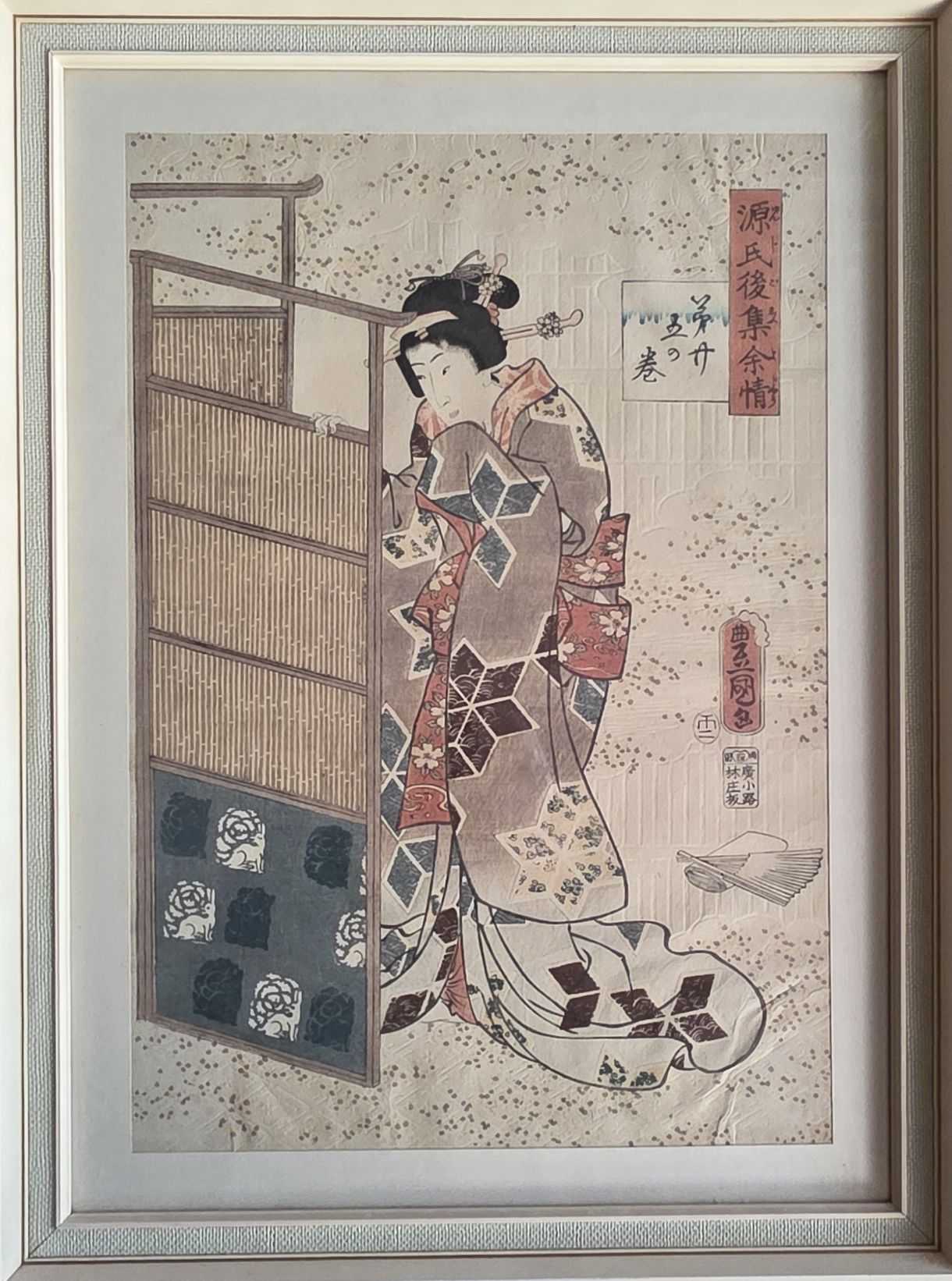
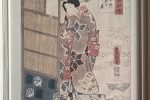
This beautiful Japanese artwork is an original mid-19th century woodblock print (ukiyo-e), a form of art central to Japan’s Edo period culture. Produced by the prolific master Utagawa Kunisada (Toyokuni III), it offers a fascinating glimpse into the historical and cultural landscape of the time, intertwining classical literature with contemporary life.
The Artist and the Era
Utagawa Kunisada (1786–1865) was an artistic powerhouse, known for creating thousands of designs during his long and successful career. He was the leading designer of his day, specializing in prints of beautiful women (bijinga) and kabuki actors. The vibrant colors and dynamic lines of his work captured the popular imagination of Edo (modern-day Tokyo) society.
The Story Within the Image
This specific print is a sheet from Kunisada’s celebrated series titled Genji goshu yojo (Lasting Impressions of a Late Genji Collection), published around 1858. It references Chapter 25 of the 11th-century Japanese literary masterpiece, The Tale of Genji.
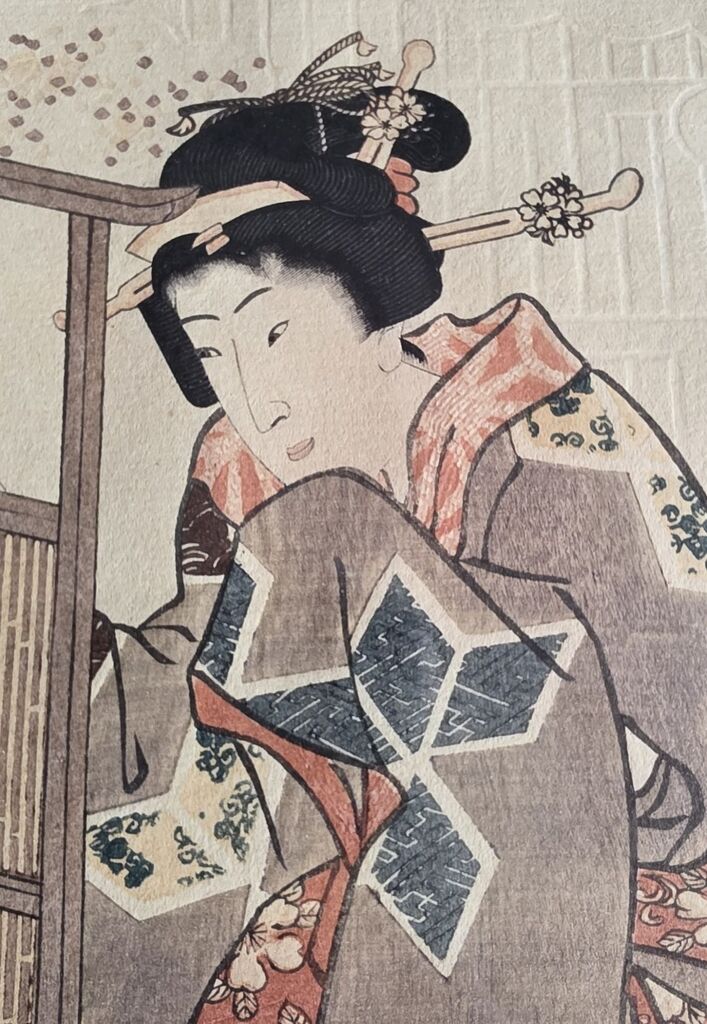
The image depicts a woman by a bamboo screen, illustrating the chapter known as “Fireflies” (Hotaru). In the original narrative, Prince Genji orchestrated a scene with fireflies to help another character see a woman hidden behind screens. Kunisada’s Genji series often offered a clever, contemporary parody (mitate-e) of the classical tale, placing modern figures in these iconic scenarios. The elegant woman in the image, wearing a striking hishi (diamond) pattern kimono, is playing the role of Lady Tamakazura from the story.

The Craftsmanship and History
Ukiyo-e prints are known for their intricate production process involving collaborative effort between the artist, carver, printer, and publisher. This series, in particular, utilized deluxe techniques. Close inspection of other similar prints reveals special effects like embossing (creating a raised texture on the paper) and textile-weave printing (impressing a fabric pattern into the paper), techniques that added a luxurious feel to the final product. The print is an authentic antique, dating back over 160 years to the late Edo period. The date seals indicate it was produced in 1858. While individual sheets from the series are generally valued between £100 and £500 depending on condition, they remain significant historical artifacts.
A Collector’s Perspective
For the serious collector, this print holds deeper scholarly context. The work isn’t a direct illustration of the classic novel itself, but rather references the incredibly popular 19th-century adaptation A Country Genji by a Fake Murasaki (Nise Murasaki inaka Genji). Kunisada designed the original illustrations for this adapted novel, establishing the visual style that made this print series a commercial success. Only 38 diptychs were issued in this specific series, making complete sets highly prized finds.











One Comment
Nice Block Print.